
Focus Period Halmstad University 2026
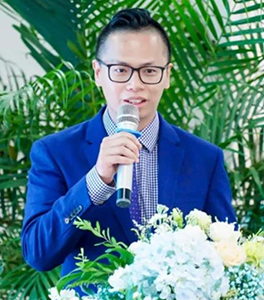
Associate Professor
Imperial College London (UK)
Dr. Guang Yang (B.Eng, M.Sc., Ph.D., SM.IEEE, M.BMVA, M.ISMRM, M.SPIE) obtained his M.Sc. in Vision Imaging and Virtual Environments from the Department of Computer Science in 2006 and his Ph.D. in medical image analysis jointly from the CMIC, Department of Computer Science and Medical Physics in 2012, both from University College London. He is currently an Associate Professor at the Bioengineering Department and Imperial-X, Imperial College London. Dr. Guang Yang is a Future Leaders Fellow and an Associate Professor (Senior Lecturer) at Bioengineering Department and Imperial-X, Imperial College London, and he is also affiliated with the Cardiovascular Research Centre, Royal Brompton Hospital. Additionally, he holds an honorary senior lecturer position at King’s College London.
Prior to his current positions, Dr. Yang gained comprehensive industrial experience while working for Siemens Medical Solutions and Medicsight PLC. He has led two international patent applications in the field of medical image processing. His research collaborations extend to institutions such as Cambridge University, Oxford University, St. George’s University of London, University of Lincoln, City University London, and University College London in the UK, as well as NIH and UCLA in the USA, Fudan University, Shanghai Jiao Tong University, Capital Medical University, and Sun Yat-sen University in China.
Dr. Yang has been involved in numerous medical data analysis projects, including breast tumour image analysis using digital breast tomosynthesis (funded by the Department of Trade and Industry and EPSRC), colon cancer computer-aided diagnosis and detection using CT imaging (funded by TSB), and multimodal advanced MRI analysis for brain tumour grading, classification, growth modelling, and therapy planning (funded by CRUK). Throughout his research career, he has published over 200 publications, including 130+ journal articles. Notable publications include one in Nature Biomedical Engineering (IF: 29.234), two in Nature Machine Intelligence (IF: 25.898), one in Proceedings of the IEEE (IF: 14.910), 26 in IEEE Transactions, three in Information Fusion (IF: 17.564), and one in Radiology (IF: 29.146). He has an H-index of 54 and an overall impact factor of 900+. Seven of his publications have been recognised as Highly Cited Papers by the Web of Science, and one publication received the Most Popular Articles award in the IEEE Transactions on Medical Imaging journal in 2020. Dr. Yang serves as an Associate Editor and editorial member for four IEEE Transactions, Neurocomputing, International Journal of Imaging Systems and Technology, Computerized Medical Imaging and Graphics, Computers in Biology and Medicine, BMC Medical Imaging, BMC Medical Informatics and Decision Making, and IET Image Processing journals.
During his time at Imperial College London, Dr. Yang worked on a cardiac MRI project funded by NIHR. Recently, he successfully completed a British Heart Foundation funded project (Co-PI, PG/16/78/32402, 2017-2019) on fast acquisition and quantitative analysis for late gadolinium enhancement MRI images. Currently, he is involved in the EU-funded European Research Council project CHAIMELEON (PI of the workstream, H2020-SC1-FA-DTS-2019-1 952172, 2020-2023) and the IMI DRAGON project (founding and board member, PI of the workstream, H2020-JTI-IMI2 101005122, 2020-2023). His current and previous research has been funded through grants totaling £5M+, with over £3M+ as the principal investigator and £2M+ as co-principal investigator. He has also been involved in consortia awards totalling €20M+.
Currently, Dr. Yang supervises 4 Post-Doctoral Research Associates, 13 PhD students, and 6 BSc/MEng students. Additionally, he co-supervises 7 additional PhD students. Dr. Guang Yang has been recognized as one of the Top 2% Scientists of the World at Stanford University since 2021. He is a recipient of the UK Global Talent Visa, endorsed by the Royal Academy of Engineering, as well as the UKRI Future Leaders Fellowship. For more information about his research group, please visit www.yanglab.fyi.