
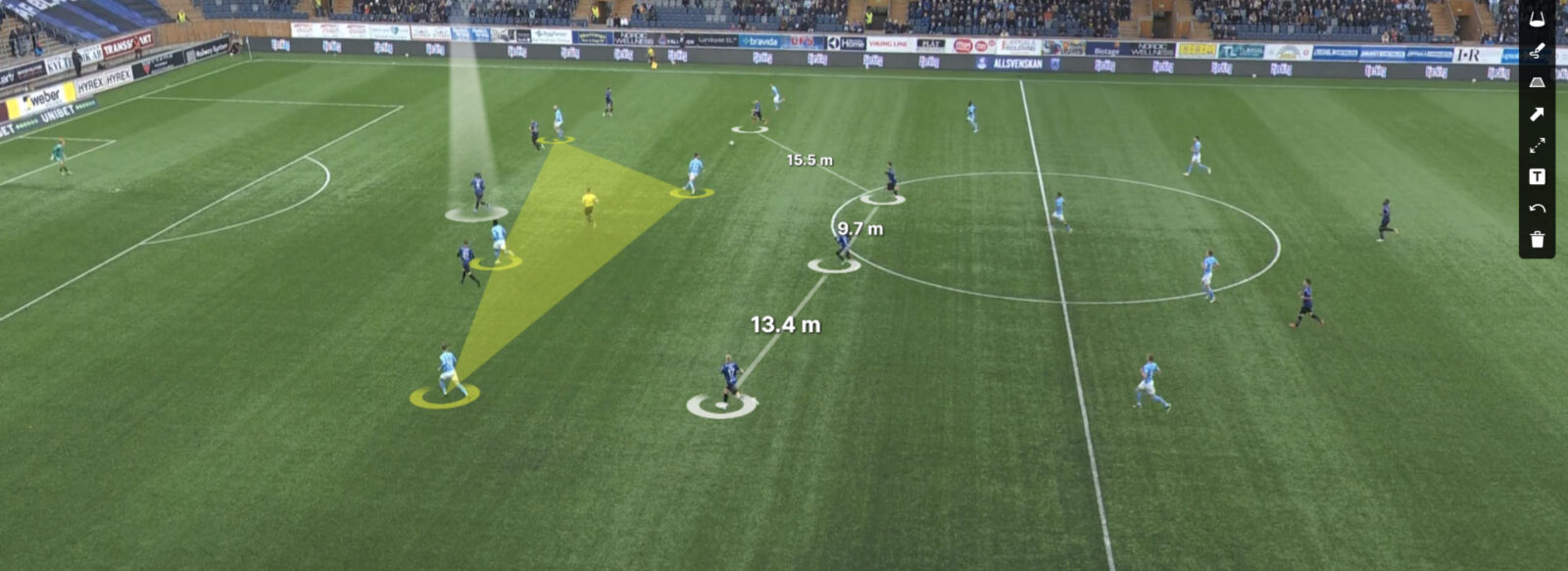
How does a film camera know how to track a football on a field? How does a camera even discern a ball from the field? And how do you create one image out of several? Since 2012 the Lund based company Spiideo has walked alongside the fundamental leaps in computer vision and machine learning, to bring the technology and its’ benefits to all levels of sports.
Spiideo provides cameras and technology for automated recording, analysis, and streaming of sporting events. The camera systems and the analysis tool use computer vision and machine learning methods to identify, track, and compile images of the event it captures. Karl Åström, ELLIIT researcher and professor at the Center for Mathematical Sciences at Lund University, has been active in the computer vision field since the early 1990’s: The progress within machine learning has been staggering. Ideas on convolutional neural networks are from the late 1980’s, but 2011 was the starting point of the revolution in AI and machine learning that we are witnessing today. Apart from convolutional neural networks, the two big leaps forward in AI and machine learning have been advances in reinforcement learning, and the large language models we now use almost daily.
At the centre for mathematical sciences, we have worked on many aspects of computer vision and machine learning during the last 20-30 years”, Karl Åström says.
These advancements have been groundbreaking for the automation in Spiideos products. Back in 2012, the company that today employs 280 persons in EU, USA and Asia, was founded by Patrik Olsson and Örjan Johansson, with developers Håkan Ardö and Karl Åström. Spiideo was formed around Johansson’s interest in track and field, and the notion of the possibilities to use computer vision in capturing sporting events.

The development of the product and the idea have led to a democratization of sports broadcasting; by enabling automated capture, postproduction, and streaming, Spiideo has made the new technologies available for many more than the customer with a large broadcasting budget:
“A children’s sports club or a local soccer team is not even close to having the financial means that the big teams or leagues have, to even film games. With this camera set-up, nearly anyone can make a one-time investment in the hardware and get an automated system that provides you with a product you can stream to parents and relatives, and recordings for analysis of the game”, Karl Åström describes.
AI support and development
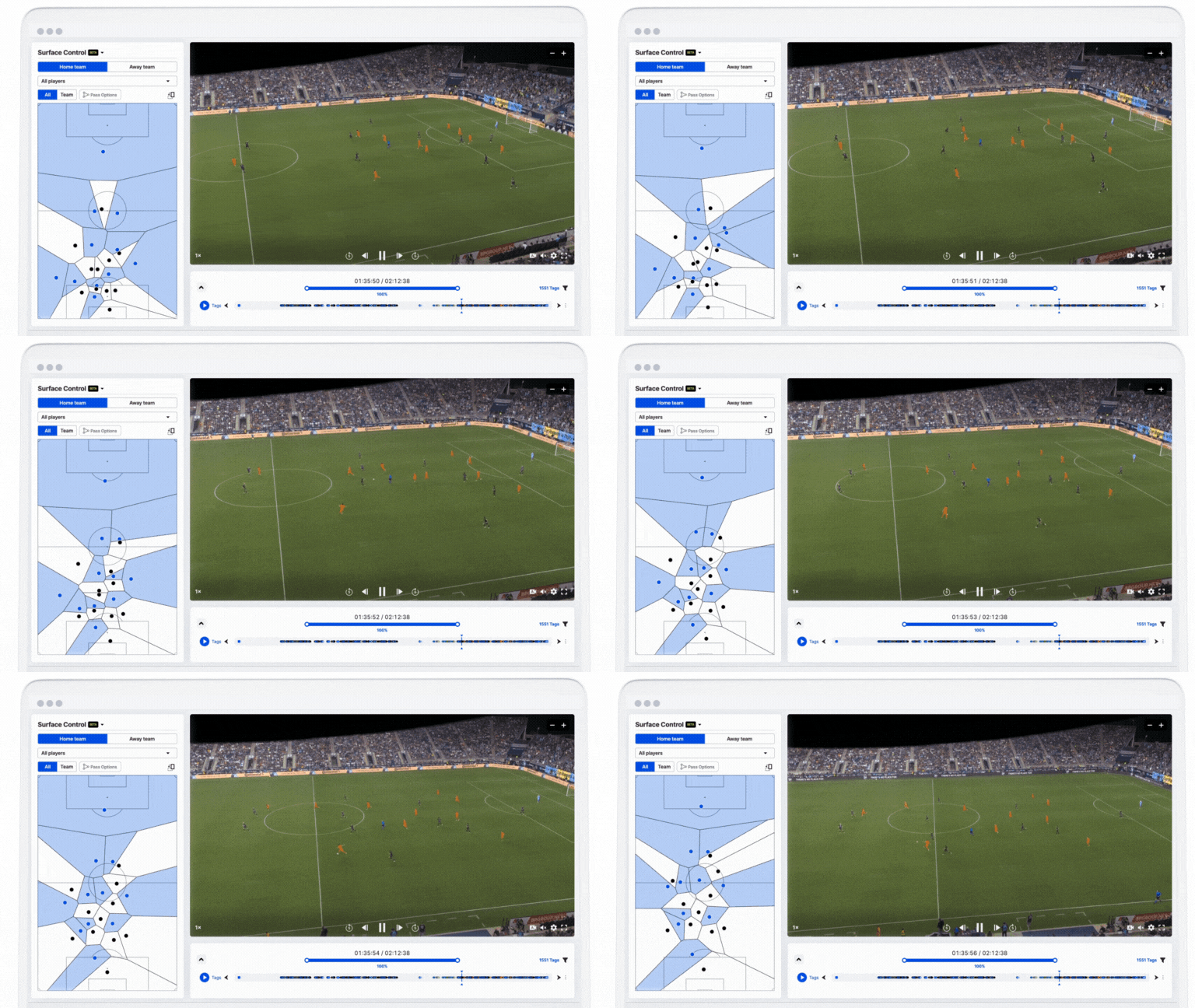
A camera system on a stadium captures all of an event, over the entire playing field. The captured material is processed with an AI tool, to achieve imagery that can be broadcasted directly. The complete recording can be utilized for analysis of the game and player performance. There are today over 5000 teams and 200 leagues worldwide using the Spiideo-system, resulting in 1,4 million live video hours processed every year.
The interesting question going forward for mathematicians is to see how we can use the recordings and the tracking data for analysis and improvement of game tactics and behaviors. This way we could give back to the sport, to everyone practicing it, on all levels, says Karl Åström.
All field images courtesy of Spiideo. Photo of Karl Åström: Lund University.