
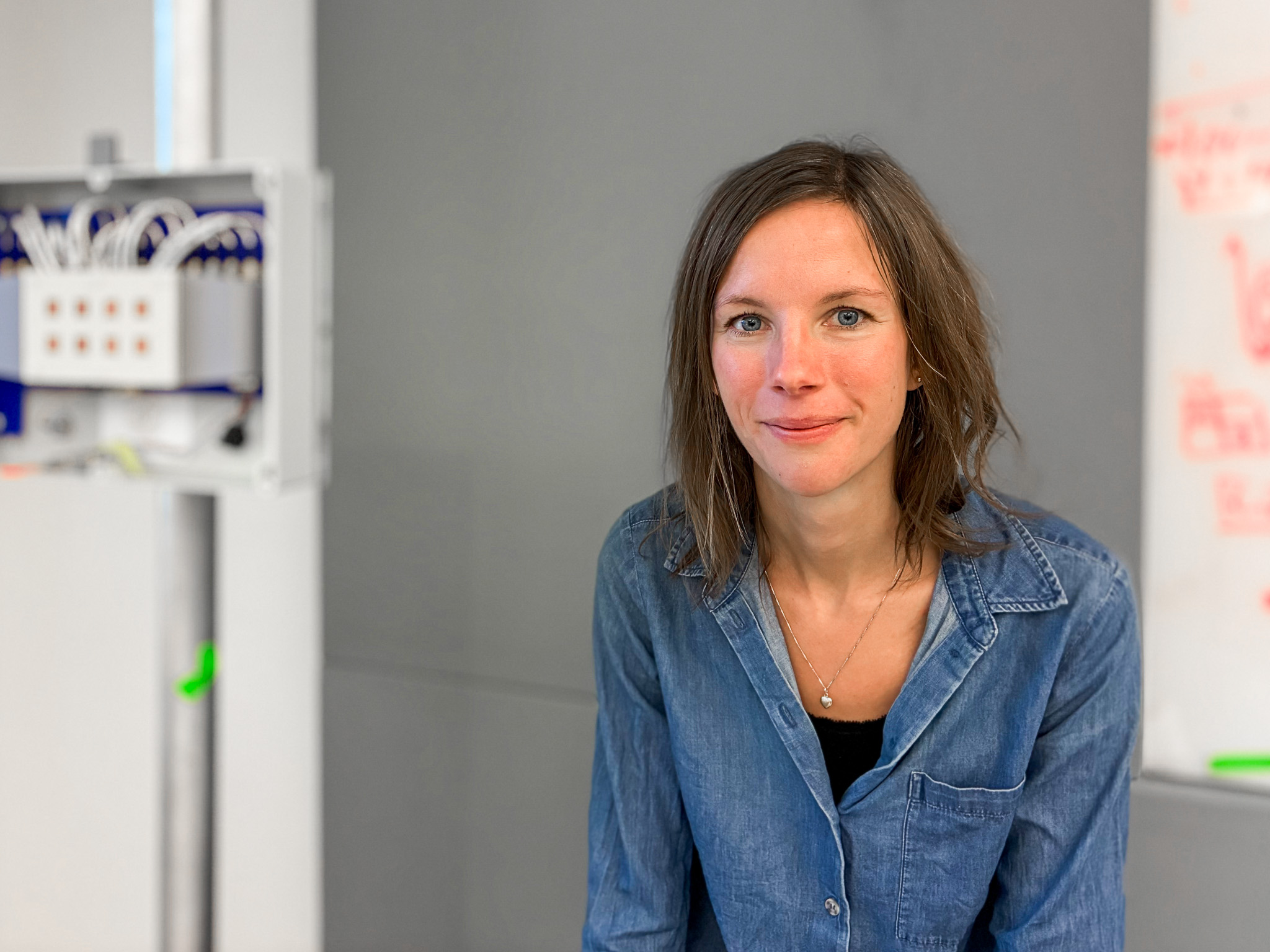
As one of ELLIIT’s newly recruited faculty members and associate senior lecturer at Lund University, Sara Willhammar is looking to bridge radio and wireless networks. Alongside her research, she has a strong interest in sustainability and in improving conditions for early-career researchers.
What research area are you particularly interested in?
My research area is wireless networks. My background is more in the radio side of networks, and I am now moving towards questions that connect radio systems with the network as a whole. I believe there are gains to win by bringing these two topics closer together and using knowledge from one area to improve something in the other. My hope is that this can lead to new interesting research questions and new ways of optimizing across different layers.
How did you become interested in electrical engineering and wireless communications?
If we go way back, I had a very encouraging physics teacher in high school and I also enjoyed working on programming problems. I studied electrical engineering at Lund University and spent some time as an exchange student in Berlin during my final year of studies. That made me want to gain more international experience. When it was time for my master’s thesis, I knew that I wanted to work on the technology called massive MIMO and that I wanted to do the project abroad. That took me to KU Leuven in Belgium, where I did my master’s thesis.
Before that, I had not really considered doing a PhD, but during my time there the idea started to become intriguing. Eventually, the opportunity arose to pursue a joint doctoral degree between Lund University and KU Leuven. It gave me the best of both environments and a community for wireless communication research. The collaboration also contributed to establishing an Erasmus agreement between the two universities, which has since then made exchanges easier.
What are you working on today?
I am involved in several projects related to wireless communication systems and networks. This includes research on repeaters and distributed antenna systems, channel characterisation and modelling, distributed MIMO and positioning. Some of these questions are currently still on the radio level. But in the longer term, there are interesting opportunities to look at them from a network perspective as well. Repeaters, for example, will exist as part of a network, so there are many questions to explore about how the radio technology interacts with the larger network.
One of the great strengths of ELLIIT is the network for collaborations it provides. It creates opportunities for national collaboration and for finding researchers in neighbouring disciplines. We often talk about interdisciplinarity, but making it happen in practice can be difficult. ELLIIT brings together researchers with different expertise, which creates a very good environment for identifying those connections and developing new collaborations.
Are there any other perspectives you would like to bring into your research?
An important question for me going forward is how we can make sustainability more tangible in our field. I would like to understand more clearly what sustainability actually means in the context of wireless networks and help facilitate discussions about how it can become a natural part of the way we think about research and technology development. Ideally, sustainability should not have to be something that is added afterwards, it should be so well understood that it becomes part of how we approach the research questions themselves.
What do you enjoy doing outside academia?
I enjoy gardening and reading and of course spending time with my family and friends. For several years, I have been involved in research and higher-education policy through Eurodoc, a European organisation representing early-career researchers. I am currently co-coordinator of a working group focusing on mental health. My engagement in student representation and research and education policy goes back to my own time as a student. Over the years, I have been involved at local, national and European levels. Through Eurodoc, we work to bring the perspectives of early career researchers into discussions at the European level. For me, it is another way of contributing to academia. Not directly through research itself, but by helping to improve the environment in which research and education takes place.
Contact and more
Read more about Sara Willhammar’s research and projects, and find contact information here.
Previous Meet the Recruited Faculty
See more interviews from our series Meet the Recruited Faculty here.