
Detailed program
Please note that the program is still subject to change.
September 21, 2026
17:30–19:30
hotel halmstad plaza
Welcome reception at Blue Sky Bar, Hotel Halmstad Plaza
A welcome drink and some hors d’oeuvres will be served.
Day 1 – September 22, 2026
08:15–08:45
Outside S1020, S building
Halmstad University
Registration
08:45–09:15
S1020, S building
Halmstad University
Opening
Grzegorz J. Nalepa, Organizing Committee Chair
Thorsteinn Rögnvaldsson, Deputy Vice Chancellor (Research)
Cristofer Englund, Dean of the School of Information Technology
09:15–10:00
S1020, S building
Halmstad University
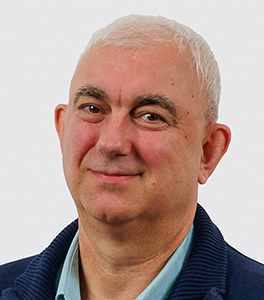
Integrating Data- and Knowledge-Driven Approaches to Automated Scientific Modeling
Sašo Džeroski, Jozef Stefan International Postgraduate School (Slovenia)
Biography
His research interests focus on explainable machine learning, computational scientific discovery, and semantic technologies, all in the context of artificial intelligence for science. His group has developed machine learning methods that learn explainable models from complex data in the presence of domain knowledge: these include methods for multi-target prediction, semi-supervised and relational learning, and learning from data streams, as well as automated modelling of dynamical systems.
Professor Džeroski has lead (as coordinator) many national and international (EU-funded ) projects and has participated in many more. He is also the technical coordinator of the Slovenian Artificial Intelligence Factory. The work of Professor Džeroski has been extensively published and is highly cited: with more than 27000 citations and an h-index of 75 (in the GoogleScholar database), Professor Džeroski is the most frequently-cited computer scientist in Slovenia (according to the 2025 ranking by Research.com).
Abstract
In knowledge-driven modelling, an expert derives a model based on their knowledge of the domain studied: Both the structure and the parameters of the model are derived by the expert from knowledge about the entities and processes in the modelled system. In data-driven modelling, many model structures are considered in a trial-and-error fashion, their parameters are fit to data, and a complete model is returned: This is typically a black-box process that does not take into account domain knowledge. Explainable scientific models need to be expressed in formalisms accessible to humans and learned through approaches that integrate data-driven and knowledge-driven modeling and use both data and domain knowledge.
The talk will discuss approaches to integrating data-driven and knowledge-driven construction of scientific models. Different formalisms for representing models and domain knowledge will be discussed, including process-based models and context-free grammars. We will conclude with a discussion of recent approaches that rely on the use of probabilistic context-free grammars and other generative models for equation discovery and place our work in the broader context of Artificial Intelligence for Science.
10:00–10:45
S1020, S building
Halmstad University
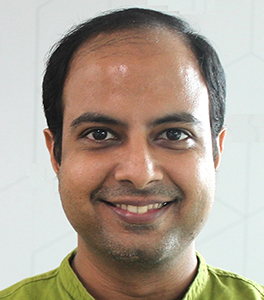
Multimodal Retrieval for Image Search and Video Moment Localization
Manish Gupta, Microsoft India R&D Private Limited (India)
Biography
Abstract
In this talk, Manish Gupta will present two multimodal retrieval systems that address challenging computer vision problems: image search and video moment localization. He will introduce novel frameworks that leverage diverse input modalities (including text, sketches, and video) to interpret complex user intent and context. He will begin with Composite Sketch + Text Based Image Retrieval, a new paradigm for image search that uses hand-drawn sketches to capture hard-to-name objects and text to describe attributes or interactions that are difficult to sketch. He will then move to the temporal domain with Video-to-Video Moment Retrieval, where a query video is used to precisely localize a semantically corresponding event within a longer target video. Together, these works demonstrate a unified vision: advanced multimodal alignment models are essential for enabling robust, fine-grained retrieval across images and videos, especially when user intent is nuanced, composite, or hard to express through any single modality.
10:45–11:15
Outside S1020, S building
Halmstad University
Coffee
11:15–12:00
S1020, S building
Halmstad University
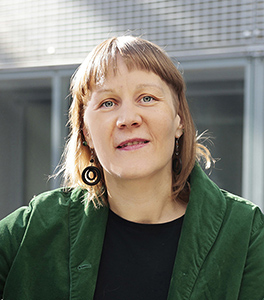
Formalizing AI for Science
Indrė Žliobaitė, University of Helsinki (Finland)
Biography
Abstract
Artificial intelligence is increasingly embedded in scientific practices. As learned models map raw observations to scientifically relevant quantities, the inferential work that scientists traditionally performed is increasingly being shifted onto the instruments. In this talk, I will discuss what changes when measurement instruments learn. While enabling new forms of discovery, learned instruments also introduce failure modes that are not fully addressed by traditional evaluation in machine learning. I will outline a new evaluative dimension relevant for assessing the stability of predictions when they are treated as measurements. I will highlight the implications of the new ways of measuring for scientific responsibility in AI-assisted science.
12:00–12:45
S1020, S building
Halmstad University
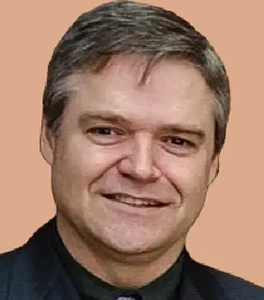
Neurosymbolic AI: From Research to Industry
Luís C. Lamb, Stony Brook University (USA)
Biography
He has led AI and machine learning projects at large corporations, universities, and startups. He shaped national and regional AI policy as Secretary of Innovation, Science, and Technology for the State of Rio Grande do Sul, Brazil, and held senior academic executive roles at the MIT Sloan’s Legatum Center for Development and Entrepreneurship and the Federal University of Rio Grande do Sul. At Boeing, he directed global AI and ML teams and co-authored the company’s first formal AI Design Practice. As Secretary, he organized the department from scratch, built eight regional innovation ecosystems, and led the evidence-based COVID-19 scientific and data response for 11 million residents, earning a #1 innovation ranking in Brazil (Center for Public Leadership, 2021–2022).
As a startup advisor and mentor, he has guided science- and technology-based ventures at the Creative Destruction Lab (CDL-Seattle, University of Washington). He organized and taught Impact Ventures: Building Innovation-driven Startups in Global Growth Markets at MIT Sloan’s Legatum Center for Development and Entrepreneurship, helping founders and students navigate AI strategy, product development, and growth in competitive global markets.
A pioneer in Neurosymbolic AI and trustworthy AI systems, Lamb co-authored Neural-Symbolic Cognitive Reasoning (Springer, 2009) and has published over 100 peer-reviewed papers at premier venues including IJCAI, AAAI, and NeurIPS. He holds a Ph.D. in Computer Science from Imperial College London and an MBA from the MIT Sloan Fellows Program. Drawing on decades of experience at the intersection of AI research, corporate deployment, public policy, and venture building, Lamb advises organizations on AI strategy, governance, responsible innovation, and the transition from research to real-world impact.
Abstract
Deployed AI systems increasingly need to reason rigorously. From early symbolic logic, through the deep learning era, to today’s LLM-based agentic AI, sound reasoning has remained crucial in AI applications. Neurosymbolic AI addresses this by embedding formal reasoning into learning systems, or coupling the two. Recent industry practice show these methods moving out of the lab and into production. I argue that neurosymbolic AI is the natural architecture for agentic AI systems: it pairs the flexibility of LLMs with the provable guarantees of formal methods such as automated reasoning.
The talk builds on RAIL (Reasoning, Assurances, Interfacing, Learning), a framework developed with colleagues across academia and industry that positions any neurosymbolic system along four dimensions: From implicit pattern matching to formal logical inference; from external validation to verification by design; from purely embedded to purely symbolic representations; and from no learning to continual neurosymbolic learning. Applying RAIL across domains shows that many high-impact AI systems are already neurosymbolic, whether or not by design. From this I derive and propose NeSyOps (NeuroSymbolic Operations), which adds a verification stage, operating over a rule base held separately from the agent, to existing AgentOps, LLMOps, and MLOps pipelines so that they provide guarantees grounded in sound neurosymbolic approaches.
12:45–14:15
RESTAURANT MANGOLD, G Building
Halmstad University
Lunch
14:15–15:00
S1020, S building
Halmstad University
Causal Meets Generative AI: From Reasoning “Why” to Imagining “What If”
Giorgos Papanastasiou, Academy of Athens (Greece)
Biography
Abstract
At the ELLIT Focus Period, Giorgos Papanastasiou will explore what happens when causal reasoning meets generative AI, and why their union may be essential for trustworthy machine intelligence in healthcare and science. Today’s most powerful AI systems learn from correlations rather than causes, leaving them brittle under distribution shifts, hard to interpret, and prone to confounder-induced spurious associations. Drawing on Pearl’s causal hierarchy, from association to intervention to counterfactuals, this talk shows how causal AI contributes structure through causal graphs, the do-operator, and individual-level counterfactual reasoning, while generative AI contributes the capacity to synthesize, imagine, and create at scale. Together they address each other’s limitations: causality grounds generative models in robustness and trustworthiness, while generative modeling lets causal systems produce rich counterfactual outputs such as images, molecules, and clinical reports. Dr Papanastasiou will illustrate this synergy through his own recent work, including large-scale causal modeling in healthcare, confounder-aware foundation models in drug discovery, benchmarks for counterfactual image generation, methods to identify confounding effects in time series and images, and LLM-driven causal discovery that can revolutionize scientific discovery at scale. The result is a compelling vision of causal generative AI spanning diagnosis, treatment planning, and drug discovery in medicine; and hypothesis generation, experimental design, and discovery from observational data in science, machines that move beyond asking “what” to genuinely reasoning about “why.”

14:45–15:45
S1020, S building
Halmstad University
Lethal Autonomous Weapons and the Ethics of Artificial Intelligence
Dante Barone, Federal University of Rio Grande do Sol (Brazil)
Biography
Informatics of the Federal University of Rio Grande do Sul (UFRGS), Brazil,
and Director of the Interdisciplinary Center for New Technologies in
Education (CINTED). He received his Ph.D. in Computer Science from the
National Polytechnic Institute of Grenoble, France, and completed
postdoctoral training at Aalto University, Finland, and CNET, France. His
research interests include Artificial Intelligence for sustainability,
machine learning, natural language processing, ethics in AI, robotics, and
innovative educational technologies. Prof. Barone has held senior academic
leadership positions at UFRGS and has served as visiting professor or
researcher at leading universities and research centers in Europe and the
United States. He has coordinated and participated in numerous international
research projects, supervised over 40 Ph.D. students, and published
extensively in high-impact scientific venues.
Abstract
The increasing integration of artificial intelligence (AI) into military systems has intensified ethical, legal, technological, and geopolitical concerns regarding the delegation of critical decisions to autonomous machines. Among the most consequential applications are Lethal Autonomous
Weapons Systems (LAWS), capable of selecting and attacking targets without direct human intervention. Their development raises fundamental questions concerning human responsibility, accountability, protection of civilians, compliance with International Humanitarian Law (IHL), and the appropriate degree of human control over lethal decisions. This presentation examines the ethical and regulatory challenges associated with military AI, focusing on LAWS, emerging autonomous capabilities, international regulatory initiatives, and differing national positions concerning prohibition, regulation, and meaningful human control.
Recent developments in the war in Ukraine illustrate the rapid evolution of AI-supported and autonomous military technologies. Ukrainian drone operations demonstrate how AI can enhance navigation and operational effectiveness while remaining under human control. In contrast, reported Russian use of drones incorporating onboard AI for target selection illustrates a further step toward autonomous decision-making. These examples highlight the distinction between AI systems that support human decisions and systems in which autonomous technologies may participate directly in target selection, raising important questions about responsibility and human control.
International positions remain divided. Some states argue that existing IHL provides sufficient principles and that excessive restrictions could limit military innovation. Others advocate a binding international treaty prohibiting fully autonomous weapons and supporting multilateral oversight. Between these positions are countries emphasizing “meaningful human control,” seeking to preserve human authority over lethal decisions while permitting certain autonomous functions.
UN General Assembly Resolution 79/239 affirms that international law applies throughout the AI life cycle in military applications. It recognizes potential opportunities, including improved compliance with IHL and civilian protection, as well as risks such as arms races, miscalculation, escalation, proliferation, and algorithmic bias. Regulatory approaches under consideration include meaningful human control, preventative moratoria, algorithmic auditing and transparency, and models combining prohibition and regulation.
The European AI Act excludes AI systems used strictly for military or national-security purposes, while the European Parliament has advocated meaningful human control and compliance with IHL. The Nordic countries similarly support a two-tier approach involving prohibition of systems unable to comply with IHL and regulation of systems retaining autonomous features under meaningful human control.
The presentation concludes that technological developments are already transforming warfare and that coordinated global action is necessary to ensure human responsibility, legal compliance, transparency, accountability, and meaningful human control over increasingly autonomous military AI systems.
15:45–17:00
Entrance, S Building
Halmstad University
Introduction of the Visiting Scholars, and poster session with coffee.
18:00–19:00
Saint Nicholas Church
Kyrkogatan 11, Halmstad
Guided city walk
Day 2 – September 23, 2026
09:00–09:45
S1020, S building
Halmstad University
AI for Sustainability: Waste Monitoring
João Gama, University of Porto (Portugal)
Biography
Abstract

09:45–10:30
S1020, S building
Halmstad University
Environmental Green AI: the New Zealand TAIAO Project
Albert Bifet, University of Waikato (New Zealand) and Institute Polytechnique de Paris (France)
Biography
Abstract
AI is becoming central to environmental science, but its own energy and compute costs are growing too. This talk presents TAIAO, New Zealand’s national programme for open environmental AI and data science, and argues that Green AI must mean both AI for the environment and AI that is itself sustainable. Drawing on open-source tools such as MOA and CapyMOA, I will show how stream learning, models that learn incrementally and adapt to change without costly retraining, supports problems like flood forecasting and biodiversity monitoring.
10:30–11:00
Outside S1020, S building
Halmstad University
Coffee
11:00–11:45
S1020, S building
Halmstad University
Reducing the Data Demand in (Clinical) Studies
Myra Spiliopoulou, Otto von Guericke University Magdeburg (Germany)
Biography
Abstract
Medical data are mostly sparse, so more when we strive to pair them with temporal data from digial health solutions. This talk stands under the claim ‘the more features we seek, the less data we harvest’, and begins by demonstrating the truthfullness of this claim by a diagnostics example and by a patient monitoring example.
We first look at two ways of RESPONDING to missingness in temporal medical data, namely imputation and synthetic time series generation (STSG). The main challenge is less of building data but rather on evaluating their quality. We look at means of evaluating the quality of imputators and of STSGs.
The second part is on PREVENTING missingness through cost-aware learning. We model the ‘cost’ of accessing data sources like wearables, and we juxtapose cost to model quality. We see methods that proactively concentrate on low-cost sensory sources and methods that dynamically acquire sensor data only when quality deteriorates. We look at Pareto fronts when attempting o optimize on cost and quality, and close with open challenges on these fronts.

11:45–12:30
S1020, S building
Halmstad University
Disease Modeling and Prediction
Juan A. Botía, University of Murcia (Spain)
Biography
Abstract
Foundational models are AI-based models that gather the basic aspects of a discipline (e.g., natural language, the language of proteins, cell biology, etc.) through the basic operation of transformation of pieces of information of the discipline and their encoding into points in a data space (i.e., the embedding space) with the promise of finding a better, more informative representation sustained in the domain’s basic principles. In this talk we will study how foundational models can be used as tools to study disease, from a clinical and molecular perspective.
Foundation models learn rich latent representations from massive amounts of unlabeled data, providing a transferable basis for diverse downstream tasks. In biomedicine, these representations can encode information spanning molecular, cellular, and clinical scales. This talk will discuss how foundation models are being applied to understand disease mechanisms, improve patient stratification, and integrate multimodal biomedical data.
We will introduce the technology to the public, we will elaborate on datasets and architectures, focusing on specific biological cases of interest. At the end, we will analyse strong restrictions on data that will hamper the development of the field.
12:30–14:00
Restaurant Mangold, G Building
Halmstad University
Lunch and group photo
14:00–14:45
S1020, S building
Halmstad University
Recent developments in AI Agents, Harnesses, and Reinforcement Learning
Martin Körling, RISE (Sweden)
Biography
Martin Körling, PhD. Martin Körling is currently leading the Data Analysis unit at RISE, the Research Institutes of Sweden. Before that he was VP Cloud Strategy at the cloud startup company evroc, covering software technology, AI platform services, and GPU infrastructure. At Ericsson he was leading the global AI/ML platform and was also based in Silicon Valley for 7 years in total. Martin holds a PhD in theoretical physics, quantum simulations, from KTH, Sweden.
Abstract
he AI-systems we now see making impact on cognitive and administrative work are combinations of large, reasoning, generative models and surrounding computing systems, harnesses. There is an ongoing evolution where code executing harnesses make significant contributions to the overall capability of the AI-systems. This goes hand-in-hand with the post-training method Reinforcement Learning with Verifiable Rewards. These methods are also applied to research and industrial use cases. We survey these recent methods and present test runs from open source tools.

14:45–15:30
S1020, S building
Halmstad University
Towards Ethical and Responsible AI Systems
Edson Prestes, Federal University of Rio Grande do Sol (Brazil)
Biography
Edson Prestes is a Full Professor at the Institute of Informatics of the Federal University of Rio Grande do Sul, Brazil. He is the leader of the Phi Robotics Research Group and a CNPq Research Fellow. He received his BSc in Computer Science from the Federal University of Pará (1996), Amazon, Brazil, and MSc (1999) and PhD (2003) in Computer Science from the Federal University of Rio Grande do Sul, Brazil.
Throughout his career, Edson has worked on several initiatives related to Standardization, Robotics, Artificial Intelligence and Ethics of Artificial Intelligence in Academia, Industry, and International and Multilateral Organizations. For instance, Edson is a Member of the Global Commission on Responsible Artificial Intelligence in the Military Domain; South America Ambassador at IEEE TechEthics; Chair of the
IEEE RAS/SA IEEE 7007.1-Ontological Standard for Addressing Risks in Artificial Intelligence Systems for Ethically Aligned Robotics and Automated Systems Working Group; Chair of the IEEE RAS/SA 7007—Ontologies for Ethically Driven Robotics and Automation Systems Standardization Working Group; Vice-Chair of the IEEE RAS/SA Ontologies for Robotics and Automation Standardization Working Group; Member of the ACM Global Technology Policy Council; Former Member of the United Nations Secretary-General’s High-level Panel on Digital Cooperation; Former Member of the UNESCO Ad Hoc Expert Group (AHEG) for the Recommendation on the Ethics of Artificial Intelligence and Former Member of the Global Future Council on the Future of Artificial Intelligence and of the G20 Digital Agenda Working Group at World Economic Forum.
Abstract
Artificial intelligence (AI) is transforming our society. Some people believe that AI will be as important as the internet. I agree that AI has the potential to improve the quality and standard of living for all people around the world. However, the enthusiasm for its evident benefits cannot overshadow the potential risks caused by the intentional and unintentional use of its applications. We have seen AI-based systems causing serious problems in global society, related to human objectification, manipulation of choices, new forms of violence, environmental degradation, and so on. In fact, AI-based systems have demonstrated their potential to impact all dimensions of human life, affecting all human rights, as established by international human rights instruments.
As AI is a central component of current and next-generation digital applications, the global community has worked tirelessly to put in place different kinds of instruments to direct how the domain should follow. In this talk, we will discuss the technical standard IEEE 7007-2021 – Ontological standard for ethically driven robotics and automation systems that focuses on the development of ethically driven robotics and automation systems. Since its publication, this standard has been used in various industrial and political scenarios as core for the implementation of robotics application and to support legislations and empower official bodies. In addition, this talk will introduce the newly approved standardization project – a ramification of IEEE 7007- called IEEE 7007.1-Ontological Standard for Addressing Risks in Artificial Intelligence Systems for Ethically Aligned Robotics and Automated Systems.
15:30–16:00
Outside S1020, S building
Halmstad University
Coffee
16:00–16:45
S1020, S building
Halmstad University
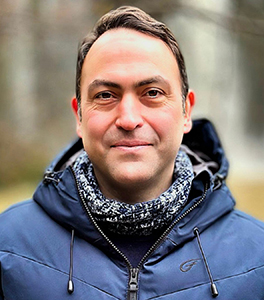
The Missing Data: Reimagining AI Systems to Challenge Structural Silences
Amir H. Payberah, KTH Royal Institute of Technology (Sweden)
Biography
Abstract
This talk examines the role of missing data in shaping AI systems and their societal impact. Rather than focusing only on biased data, it highlights how what is excluded, ignored, or never collected plays a crucial role in how these systems are built and how they function. The talk situates these omissions within broader questions of power, showing how they can silence certain voices, overlook lived experiences, and reinforce existing inequalities. It also reflects on how AI systems are embedded in wider structures that shapes what becomes visible and what remains invisible. Finally, it discusses the need to move beyond narrow technical and ethical framing, and instead considers more justice-oriented and care-centered approaches to designing and developing AI systems.
16:45–17:30
S1020, S building
Halmstad University
Panel discussion: Perspectives on the Challenges for Robust AI
19:00–21:00
Hotell Mårtensson
Symposium dinner
Day 3 – September 24, 2026
09:00–09:45
S1020, S building
Halmstad University
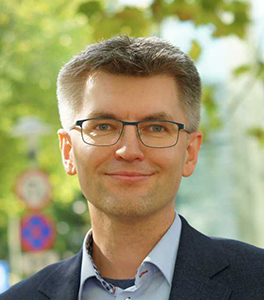
Generative Interventions as a Microscope: Understanding What Sybil Learned About Lung Cancer
Przemysław Biecek, Warsaw University of Technology and University of Warsaw (Poland)
Biography
He is internationally recognized as one of the top 2% most influential scientists (Stanford ranking) and a laureate of the prestigious Fulbright IMPACT Award. He received the “Frontiers in AI” distinction from Adam Mickiewicz University for his contributions to transparent and socially responsible AI. His work has appeared in leading venues such as Nature Machine Intelligence, NeurIPS, ICML, ECCV, CVPR, and AAAI. He has delivered invited talks at major conferences including ECML and ECAI and has co-organized workshops on explainable and trustworthy AI at NeurIPS, AAAI, ECAI, and ECML-PKDD.
Professor Biecek is the creator and maintainer of widely used open-source packages for model interpretability (e.g. DALEX, auditor) and an active contributor to standardization efforts in credible AI. He has served on program committees of top-tier conferences, advised European institutions on AI safety and ethics, and collaborated with industry partners on deploying interpretable models in high-stakes domains.
Beyond research, he is strongly engaged in education and outreach. He founded the Smarter Poland Foundation and promotes AI literacy through comic books, courses, and science communication. His interdisciplinary work at the interface of statistics and computer science has established him as a leading voice in the global debate on reliable and responsible AI.
Abstract
Sybil is a deep learning model that predicts future lung cancer risk from a single low-dose CT scan, and it has passed extensive clinical validation. Yet we still know surprisingly little about what it has learned. Observational metrics tell us how often a model is right, not why.
In this talk I argue that closing this gap calls for a shift from Data Science to Model Science: a discipline that treats the trained model itself as the object of empirical study, built on verification, explanation, control and interfaces.
I will present an auditing framework that uses 3D diffusion bridges to remove or insert pulmonary nodules in CT scans, turning generative models into a microscope for causal questions. Validated by expert radiologists, this first interventional audit of Sybil shows that the model often reasons like a radiologist, but also exhibits sensitivity to clinically irrelevant artifacts and a systematic radial bias.
Finally, I will ask how such findings can accumulate rather than stay scattered across papers, and introduce Modelpedia, an automated framework for extracting and aggregating findings about foundation models.
09:45–10:30
S1020, S building
Halmstad University
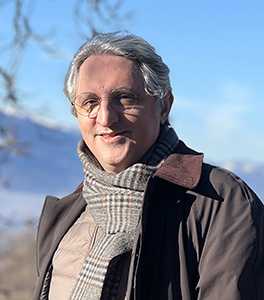
Engineering High-Throughput AI: A Playtesting and Reinforcement Learning Usecase
Anjed Anjedani, King (Sweden)
Biography
Abstract
Automated playtesting helps game designers assess how changes to a puzzle level affect its difficulty and duration. At King, this requires running AI bots through many game rounds and searching over candidate level adjustments. This talk examines the engineering behind these workloads: redesigning legacy execution paths to reduce communication overhead, tuning simulation concurrency, and scaling reinforcement learning through local actors and a distributed learner.This talk explores the trade-offs between throughput, policy staleness and evaluation reliability, and how these choices support faster, more meaningful feedback for designers and researchers.
10:30–11:00
Outside S1020, S building
Halmstad University
Coffee
11:00–11:45
S1020, S building
Halmstad University
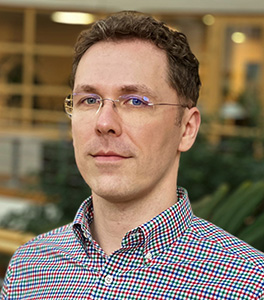
From Research Collaboration to Reliable Uptime: Robust Data-Driven Prognostics for Volvo Truck Fleets
Maciej Misiorny, Volvo Group – Trucks Technology & Industrial Division, Uptime & Service Technology, Sweden
Biography
Maciej Misiorny is a Principal Data Scientist and R&D Engineer with over 20 years of experience in industrial and academic research. He specializes in transforming complex data into reliable, value-creating solutions through the use of physics-based modelling, data-driven methods, machine learning and deep learning. His primary expertise lies in Prognostics and Health Management (PHM), where he combines artificial intelligence and machine learning with physics-of-failure models to enable real-time system-health monitoring, fault diagnosis, and remaining-useful-life prediction. His professional experience encompasses predictive maintenance, battery prognostics, smart product analytics, and image- and sensor-data analysis. Maciej has led and contributed to advanced technology projects for organizations including Volvo Group, Scania, Essity, RISE, CEVT/Zeekr Technology Europe, and PTI/ASSA ABLOY. He holds a PhD and a habilitation in physics, and he has an extensive track record of international research collaboration and successful acquisition of competitive research funding. As Principal Investigator, he has led several fundamental and industrial research projects, including the innovation projects iRel4.0 (“Intelligent Reliability 4.0”) and KEEPER (“Knowledge Creation for Efficient and Predictable Industrial Operations”). He is an expert in the industrialization of research, helping to transform cutting-edge data-driven academic research into robust, deployable solutions that deliver practical business value.
Abstract
Ensuring reliable vehicle uptime demands more than accurate predictions. AI/ML-based prognostic solutions must remain effective and trustworthy despite noisy and incomplete data, heterogeneous operating conditions, changing vehicle configurations, and limited task-specific labels. In this presentation, Maciej Misiorny will share Volvo Group’s insights on leveraging data-driven prognostics for truck fleets, emphasizing how research collaboration helps transform industrial data into robust, actionable uptime services.
The talk will explore the gap between the theoretical capabilities of AI/ML and the realities of industrial deployment. The key challenges we are facing include inherent data imperfections, heterogeneous fleets and operating contexts, irregular and sparse observations, and the necessity to integrate machine learning with expert knowledge and operational feedback. These challenges motivate a transition from fragmented, task-specific, “data-consummatory” solutions toward scalable and “data-perceptive” prognostic platforms capable of detecting anomalies, handling varying data quality, and exploiting synergies across use cases.
The presentation will also demonstrate the pivotal role the collaboration with academia plays in facilitating this transition through initiatives such as KEEPER, FeelAI, and UNIFY-AI. The central message is that robust industrial AI/ML emerges not from models alone, but from the integration of data, domain expertise, engineering practices, and continuous research collaboration. When combined, these elements can transform emerging AI/ML methods into reliable decision-support tools that deliver measurable uptime improvements across truck fleets.
11:45–12:30
S1020, S building
Halmstad University
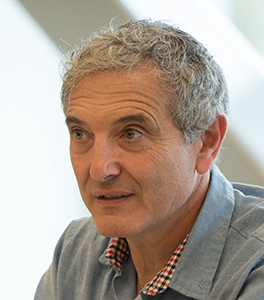
Analysis of Coordination and Multi-Agent Dynamics in Sequential and Generative Models
Shlomo Dubnov, University of California (USA)
Biography
Abstract
Understanding coordination in complex sequential and generative systems requires going beyond the statistics of individual components to characterize how information is shared, directed, and reorganized over time. In this talk, I will discuss an information-dynamic approach to multivariate and multi-agent systems based on information rates, predictive information, and directed information.
I will first motivate the approach through examples from musical interaction, where differences between joint and marginal information-rate statistics can reveal dependencies and coordination between simultaneously evolving musical streams. This perspective naturally leads to directed information, which introduces temporal asymmetry and provides a framework for studying information flow and causal interaction in sequential systems.
I will then consider how these ideas extend to dynamical and generative systems, with particular emphasis on robustness and adaptive control, using classical results connecting communication rate and stability as a bridge toward perception–action in cognitive systems. Using simulated quadruped experiments as a case study, I will discuss how information flow between sensory variables, actions, and interacting components changes under perturbation and failure. More broadly, the goal is to explore whether information dynamics can provide a common language for analyzing coordination, causality, and robustness in multi-agent and generative AI systems.
12:30–14:00
Restaurant Mangold, G Building
Halmstad University
Lunch
14:00–14:45
S1020, S building
Halmstad University
Why Current State-of-the-Art Explainable AI Methods Are Inadequate
Kary Främling, Umeå University (Sweden)
Biography
Abstract
Robust AI is usually treated as a property of algorithms. But an instrument is only useful if someone can tell when it is misreading, and with AI that judgement falls to people: the researcher deciding whether a result is a finding, the engineer deciding whether to act on a prediction. They need to judge, case by case, how far the system can be trusted. Trust in this sense is not a property of the AI alone. It belongs to the AI and its users together, and it has to survive change, as tasks, users and models all move over time. This talk argues that today’s leading XAI methods cannot support it.
The first problem is that each method answers only one kind of question: why, why not, what if, how to, why A rather than B. Answering several questions therefore means using several methods, each resting on its own mathematics. The user is left to reconcile answers that may not fit together. The second problem is that explanations cannot be argued with. Reliance that cannot be questioned and revised is dependence, not trust, and a finished explanation gives you nothing to push back against. Both problems have the same cause: today’s methods build a separate explanation for each question, and nothing guarantees those explanations agree.
The talk then shows how Contextual Importance and Utility (CIU) addresses both. CIU answers all these question types from one and the same model, so its answers stay consistent with each other. That consistency is what lets explanation become a conversation rather than a one-off output, one that supports dialogue, different kinds of audience, and evaluation in context. It also changes what we should measure. The question is not whether users like an explanation, but whether their trust rises and falls with the system actually being right, including the cases where it is wrong.

14:45–15:30
S1020, S building
Halmstad University
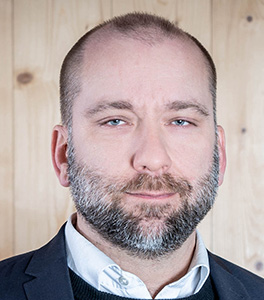
Robust, Resilient, Responsible – Integrative Design of Trustworthy AI
Martin Atzmüller, Osnabrueck University (Germany)
Biography
Martin Atzmueller is Full Professor (W3, tenured) at Osnabrück University (Germany), where he heads the Semantic Information Systems research group, as well as Scientific Director at the German Research Center for Artificial Intelligence (DFKI), heading the research department Cooperative and Autonomous Systems. Previously, he also held appointments at Tilburg University (The Netherlands) as an Associate Professor, and at the Université Sorbonne Paris Nord (France) as a Visiting Professor. Martin Atzmueller’s research interests include Artificial Intelligence (AI), Data Science and Integrative AI Systems, where his research covers, in particular, complex data, explainable AI, interpretability, machine perception, as well as semantic modeling. A major focus lies on machine learning and analysis on complex (sensor) data such as images, graphs, networks, and temporal data, often encountered in complex systems, as well as the respective system view and design. This also relates to applications in complex integrative AI system domains, for example, to robot control and integrative sensor-based AI systems. Here, the goal is to develop according semantic perception-based information systems, which can act both interactively and autonomously, in particular also enabling explainable methods for trusted AI system design.
Abstract
As artificial intelligence (AI) systems become increasingly complex and pervasive, ensuring their trustworthiness is crucial, in particular relating to industrial applications in high-riskdomains. Important dimensions include safety, security, reliability, and transparency. However, the opacity of many instantiations of AI systems poses significant challenges to understanding their internal mechanisms. This talk considers fundamental aspects of robust, resilient and responsible AI for the integrative design of trustworthy AI systems. From a system perspective, we outline the respective issues, and provide illustrative examples.
15.30–16:15
S1020, S building
Halmstad University
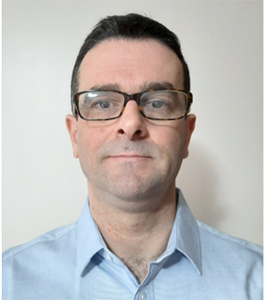
AI for Simulation-Based Training: Lessons from Ten Years of Research and Applied Collaboration
Luís Alvaro de Lima Silva, Professor, Federal University of Santa Maria (Brazil)
Biography
Prof. Luís A. de Lima Silva holds B.Sc. and M.Sc. degrees in Computer Science from the Federal University of Rio Grande do Sul (UFRGS) and a Ph.D. in Computer Science from University College London (UCL, UK). He is affiliated with the Department of Applied Computing at the Federal University of Santa Maria (UFSM), where he teaches in the Computer Science, Information Systems, and Computer Engineering programs, and is a permanent member of the Graduate Program in Computer Science (PPGCC/UFSM). His research focuses on the development and application of Artificial Intelligence (AI) methods, including Deep Learning, Generative Adversarial Networks (GANs), Transfer Learning, Explainable AI (XAI), Clustering, Reinforcement Learning, and Case-Based Reasoning. His current research spans Cybersecurity, Defense, Health, Environment, and Computer Games. In Defense, he has participated in the SIS-ASTROS projects since 2004, a partnership between UFSM and the Brazilian Army focused on simulation systems for the tactical training of ASTROS artillery batteries. His research includes agent-based simulation, path planning in large-scale virtual environments, and AI-based decision support. He currently coordinates a FAPERGS-funded project on Transfer Learning, Transformers, and GAN architectures for synthetic data generation in Digital Health and Cybersecurity. He is also a member of the CIARS network project on AI for healthcare and a tutor in the PET Saúde Digital UFSM program, an initiative of the Brazilian Ministry of Health. His research also addresses Deep Learning models for climate resilience of river basins and road ecology, as well as algorithms for competitive and collaborative multi-agent games involving imperfect information and bluffing, particularly the card game Truco. Previously, he participated in the Petrographer Project on Knowledge Engineering for petroleum reservoir assessment and conducted research on AI for the authentication and dating of historical paintings.
Abstract
This talk will briefly reflect on more than a decade of research and development in simulation-based training, carried out through a long-term collaboration among researchers from different areas of Computer Science (CS) at the Federal University of Santa Maria (UFSM), a researcher from the Federal University of Rio Grande do Sul (UFRGS)—both universities located in southern Brazil—and the Brazilian Army. I will first present how the Integrated Simulation System ASTROS (SIS-ASTROS) project has evolved through three major R&D initiatives, from the development of an integrated virtual environment for tactical simulation to current efforts aimed at providing broader and more reusable agent-based simulation capabilities. I will then discuss how practical simulation requirements have progressively given rise to research problems in Artificial Intelligence (AI) and other areas of Computer Science. Among the various military needs addressed throughout the project, I will highlight my research group’s work on scalable pathfinding over large, realistic terrains; hierarchical and topography-aware path planning; learning-based heuristics; and interactive autonomous agents designed to support training at multiple echelon levels within the same simulation environment. From this perspective, the talk will focus on the research and engineering challenges that emerge from real-world simulation-based training involving ASTROS artillery batteries and groups. Finally, I will discuss lessons learned from this long-term experience, including challenges in applied AI, human–autonomy interaction during simulation sessions, iterative co-development with military experts, and the relationship between sustained applied research and the development of operational simulation systems.
16:15–16:30
S1020, S building
Halmstad University
Closing and summary
16:30–16:45
Outside S1020, S building
Halmstad University