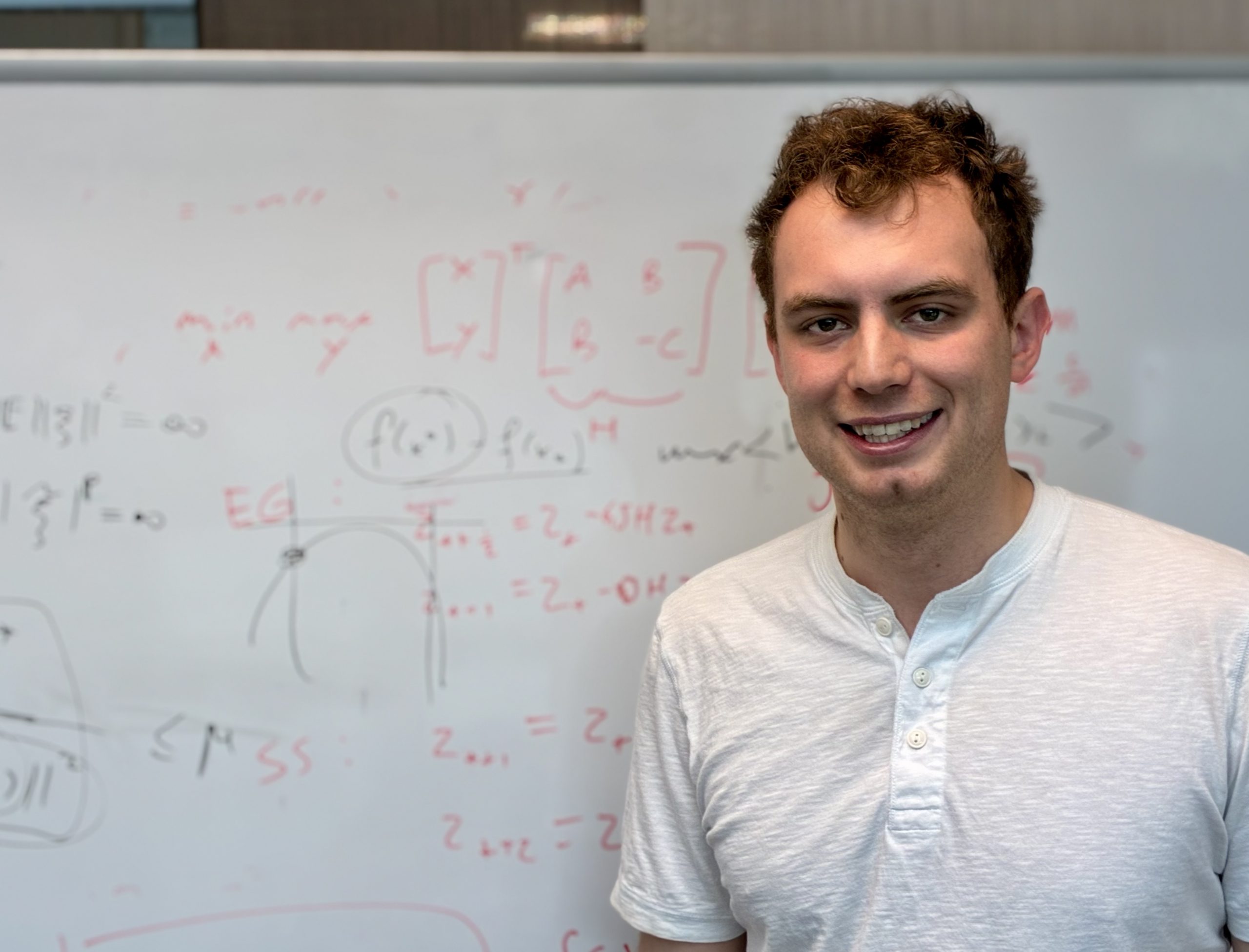
The focus period on Optimization for Learning was hosted by Lund University from mid-April to May 22. Henry Shugart, third-year PhD student from the University of Pennsylvania, spent the whole focus period in Lund at the Department of Automatic Control.
When Henry Shugart was first asked by his supervisor if he wanted to go to Sweden for a workshop, the decision was easy.
“I don’t get to go over to Europe very much,” he says. “So when I had the option, I chose to stay for all five weeks.”
Henry’s line of research is first-order optimization methods, with a focus on min-max problems and performance estimation. The resulting, more efficient algorithms have applications across machine learning and data science.
”I study problems with two players, so I’m solving the kind of game problems where the two players don’t play the same strategy. We make better algorithms by forcing the two players to either collaborate or to play asymmetric strategies, which are slightly harder to analyze but frequently yield kind of new and interesting algorithms.”
Future collaboration and exchange of thoughts
During the five-week focus period, Henry quickly found opportunities to engage with others in the field, both visiting scholars and Lund faculty members. One collaboration is already set up, with Lund alumni, now at Inria Paris. Beyond that, informal discussions have played a key role. For Henry, these connections are an investment in the future.
“These are people I’ll probably see throughout the rest of my career,” he adds. “It’s good to have friends.”
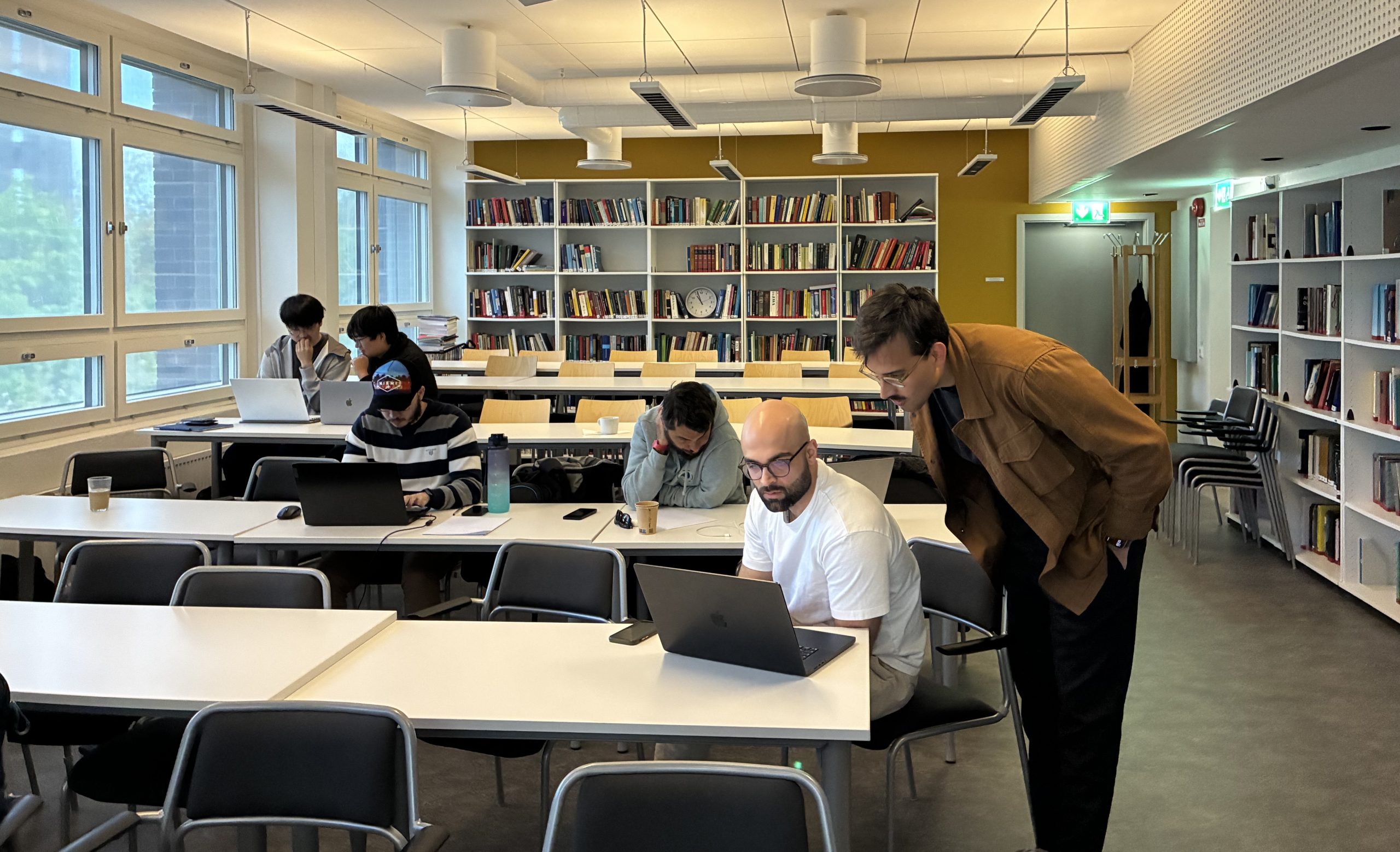
The focous period schedule included different mini courses, seminars, and like here, tutorials in class with Manu Upadhyaya (right).
One of the highlights of the focus period was the symposium. Henry Shugart says he enjoyed the format, that differs from many other conferences:
”Instead of parallel sessions, the program featured one talk at a time, so you never felt like you were missing something.”
Part of the department
Equally important for a meaningful stay was the day-to-day life within the department, where academic exchange was fueled by the basically mandatory coffee at10 and 15 o’clock. Shared lunches, casual conversations, and regular activities helped create a sense of belonging.
Henry highlights a simple piece of advice for future visiting scholars and focus period participants:
“Being present,” he says. “Being at all the social events, getting to really meet the people. I think just being around the department was the biggest thing that helped me, and was fun and beneficial.”
Symposium
Read our report from the focus period symposium May 6 – 8, 2026.
ELLIIT Focus Period
Find out more about the focus period on Optimization for Learning.