
Wednesday, April 8
13:15 - 13:45
Label-Efficient Self-Supervised Acoustic Indoor Positioning Enabling Effortless Deployment
Daan Delabie, PhD Student at KU Leuven (Belgium)
Abstract
Data-driven Indoor positioning systems (IPS) commonly require ground truth (GT) labels and are prone to changing environments. This makes deployment labour-intensive and difficult to scale. This work proposes a label-efficient and self-supervised ultrasonic IPS that removes these requirements by learning the spatial relationships of the environment directly from received channel observations. The method builds on channel charting (CC), using a triplet-based training objective and a graph neural network (GNN) to generate a latent chart that preserves geometric neighbourhoods. An affine alignment step maps the learned chart to physical space using only a minimal number of reference points. The system is implemented and evaluated in an indoor testbed. Results demonstrate that the CC-based approach achieves positioning accuracy close to conventional supervised learning while requiring neither GT labels nor anchor coordinate knowledge, highlighting its potential for effortless and scalable deployment. Additional learning during operation mitigates the difficulties arising from a dynamically changing environment.
Biography
Daan Delabie earned his M.Sc. degree in Engineering Technology from KU Leuven campus Ghent, Belgium, in 2020, graduating magna cum laude. He started as a researcher at the same institution and became a member of Dramco, a research group covering a broad range of research topics in positioning, wireless communication and power transfer, IoT and embedded systems. In 2021 he started a Ph.D. regarding hybrid RF-acoustic indoor localisation for energy-neutral devices. This Ph.D. is expected to be completed by the end of 2025. His main interests are indoor positioning, acoustic/ultrasonic sensing and signalling and machine learning.

14:00 - 14:30
Multipath-based Simultaneous Localization and Mapping for Distributed MIMO Systems
Xuhong Li, Postdoctoral researcher at Lund University (Sweden)
Abstract
Localizing users and mapping the environment using radio signals remains a challenging yet vital task for emerging applications such as reliable low-latency communications, location-aware security, and safety-critical navigation. Multipath-based simultaneous localization and mapping (SLAM) in 5G and beyond networks has emerged as a promising approach to address this challenge. In this seminar, I will present our recent work on Bayesian multipath SLAM methods for distributed MIMO systems. The proposed methods perform adaptive data fusion across propagation paths and distributed base stations, enabling improved localization accuracy while constructing more physically meaningful environmental maps than classic methods. The potential of the presented methods is demonstrated using real radio measurements collected in complex environment.
Biography
Xuhong Li received her MSc and PhD degrees in Electrical Engineering from Lund University, Sweden in 2013 and 2022 respectively. She was postdoctoral researcher at the Department of Electrical and Information Technology, Lund University, from 2022 to 2024. She is currently a postdoctoral researcher at the Department of Electrical and Computer Engineering, University of California San Diego. Her research interests include radio channel measurement, modeling and parametric estimation, radio-based localization and sensing, statistical signal processing, inference on graphs and machine learning.

14:45 - 15:15
Sparse OFDM Design for Interference and Ambiguity Mitigation in Multi-Static ISAC
Priyanka Maity, Postdoctoral Researcher at Chalmers University of Technology (Sweden)
Abstract
Future 6G networks are expected to transform communication infrastructure into large-scale distributed sensing platforms, enabling applications such as intelligent transportation, smart environments, robotics, and digital twins. A key challenge in realizing this vision is enabling multiple base stations to perform joint sensing and communication reliably in dense deployments, where mutual interference, waveform ambiguity, and hardware constraints can significantly degrade sensing accuracy and robustness. In this talk, we present a multi-static integrated sensing and communication (ISAC) framework in which half-duplex base stations cooperate as distributed transmitters and sensing receivers. We introduce a sparse and randomized OFDM waveform design that efficiently mitigates inter-station interference while suppressing sensing ambiguities inherent to multi-static operation. By carefully selecting subcarrier spacing and introducing controlled irregularity across time and frequency resources, the proposed design maintains robustness against synchronization impairments, multipath clutter, and dense spectral reuse, with minimal noise-floor degradation. Simulation results demonstrate reliable multi-target sensing performance even in challenging interference and clutter scenarios, highlighting the feasibility of scalable, infrastructure-based wireless sensing.
Biography
Priyanka Maity is a postdoc at Chalmers University of Technology, Sweden. She received the Ph.D. degree in Electrical Engineering from Indian Institute of Technology Kanpur, India in 2025 and the M.Tech. degree in communication and networks from National Institute of Technology Rourkela, India, in 2018. Her research interests include signal processing techniques for wireless communication, integrated sensing and communication (ISAC), distributed MIMO radar, secure sensing. She was awarded the prestigious Qualcomm Innovation Fellowship (QIF) in year 2024 from Qualcomm.

Thursday, April 9
13:15 - 13:45
Least Squares 6-DOF Absolute Pose Estimation from Radar Range and Bearing Measurements
Gustav Nilsson Gisleskog, PhD student at Lund Universit (Sweden)
Abstract
Environment mapping and vehicle localization using radar measurements is of key importance in many applications. Traditional approaches typically assume that vehicles move in a 2D (ground) plane, aligned with the radar beam directions, consequently generating in-plane maps and poses. In reality, because of beam spreading, the radar direction- and angle-measurements can be seen to constrain object-detections to be localized on a great circle centered at the radar. In this seminar we show that, using such circular measurements, it is possible to efficiently compute the full 6-DOF radar pose. This opens up the possibility of obtaining full 3D-mapping and localization of vehicles beyond the standard 2D-scenario. We develop a method able to find the most likely radar pose by optimally solving the associated least squares fitting problem. We demonstrate the method’s effectiveness and accuracy on both synthetic and real datasets.
Biography
Gustav Nilsson Gisleskog is a PhD student in applied mathematics and computer vision at Lund University. His research focuses on computer vision problems where data from radars and possibly cameras is available. In particular, the goal is to estimate the 3D structure of a scene, given varying numbers of images and radar scans. Before starting his PhD, Gustav received an MSc degree in Computer Science from Lund University in 2025. Outside of his research, he also enjoys competitive programming, both as a participant and organizer of competitions.

14:00 - 14:30
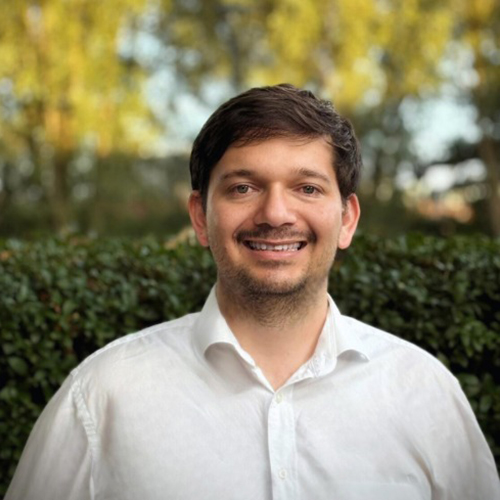
Invex Optimization: Theory and Applications for Signal/Image Processing and Machine Learning
Samuel Pinilla, Senior Data Scientist at Rutherford Appleton Laboratory (UK)
Abstract
This talk provides an accessible introduction to invex optimization from a signal processing perspective. While convex formulations are widely used due to their guarantees of global optimality, they rely on idealized assumptions-such as noiseless measurements and precisely modeled priors-that often do not hold in real-world scenarios. In practice, measurement noise is pervasive, and convex regularizers may inadequately capture key data properties like sparsity, low-rankness, smoothness, or anomalies. Although non-convex constrained optimization methods often yield superior reconstruction quality compared to their convex counterparts, ensuring global optimality remains a fundamental challenge. Invex optimization offers a promising alternative, as an invex function guarantees that any critical point is a global minimizer. This short course explores recent advances in invex optimization for constrained inverse problems, covering theoretical foundations, algorithmic developments, and practical applications across various domains, including machine learning, imaging, and signal processing. A key focus is signal restoration, a crucial inverse problem with applications spanning physics, medical imaging, and engineering. Ensuring global optimality in such problems is essential for obtaining the most accurate solutions within given constraints. This short course aims to foster interdisciplinary collaboration, bridging different areas of signal processing and deepening our understanding of nonconvex inverse problems.
Biography
Samuel Pinilla (S’17) received the B.S. degree (cum laude) in Computer Science in 2014, the B.S. degree in Mathematics, and the M.S degree in Mathematics from Universidad Industrial de Santander, Bucaramanga, Colombia in 2016 and 2017, respectively. His Ph.D. degree from the Department of the Electrical and Computer Engineering, Universidad Industrial de Santander, Bucaramanga, Colombia. He is a senior data scientist at the Rutherford Appleton Laboratory, United Kingdom. In the past, Dr. Pinilla held Visiting Postdoctoral Researcher positions at Tampere University 2020-2021 and worked as a fellow research associate at The University of Manchester 2021-2022. His research interests focus on the areas of high-dimensional structured signal processing, machine learning, scalable AI, and (non)convex optimization methods. Dr. Pinilla is the recipient of the Eloy Valenzuela Prize for his doctoral studies, the International Conference on Acoustics, Speech and Signal Processing top 3% Paper Recognition in 2023.
14:45 - 15:15
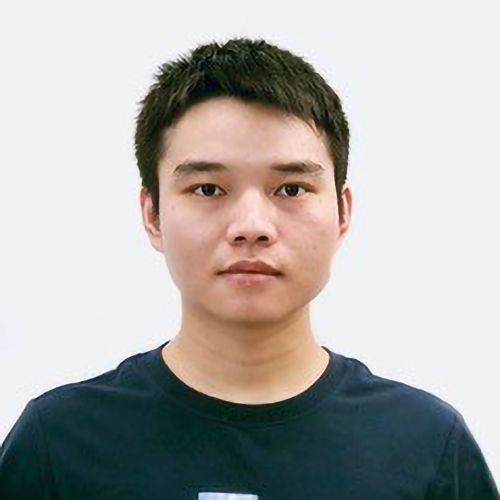
Secure Time-Modulated Intelligent Reflecting Surface via Generative Flow Networks
Zhihao Tao, PhD student at Rutgers University (USA)
Abstract
Integrated Sensing and Communication (ISAC) systems promise unprecedented spectral efficiency and hardware reuse by employing shared waveforms and platforms for simultaneous radar sensing and wireless communication. However, this tight integration fundamentally reshapes the security landscape: sensing targets are no longer passive and may act as unintended or even malicious receivers of communication data.
This talk presents a new paradigm for ISAC security in OFDM-based systems assisted by time-modulated intelligent reflecting surfaces (TM-IRS). By exploiting time modulation, TM-IRS induces controlled inter-carrier mixing that preserves constellation integrity only along intended directions, while deliberately scrambling signals in all other spatial directions. Moving beyond existing rule-based designs, we introduce a generative flow network (GFlowNet)–based framework that casts TM-IRS configuration as a high-dimensional combinatorial design problem. The proposed approach learns a stochastic sampling policy that prioritizes high-quality configurations according to a reward function capturing multi-user communication performance, worst-case secrecy rate over a suspected target region, and radar sensing constraints.
The resulting design simultaneously supports sensing, multi-user communication, and physical-layer security, while remaining robust to noise and hardware impairments. Moreover, the inherent stochasticity of the learned policy provides an additional layer of protection, making the system difficult for adversaries to predict or reverse-engineer. Experimental results demonstrate that the proposed method significantly enhances the security of TM-IRS-aided OFDM systems in multi-user settings. Despite the enormous configuration space, the GFlowNet converges after exploring fewer than 0.000001% of all possible configurations, highlighting its remarkable efficiency relative to exhaustive combinatorial search.
Biography
Zhihao Tao is pursuing the Ph.D. degree in Electrical and Computer Engineering at Rutgers University, New Brunswick, NJ, USA, under the supervision of Prof. Athina Petropulu. His research focuses on digital signal processing, wireless communications and networks, and deep learning for wireless. He received the B.E. degree in Electronics and Information Engineering from Sichuan University, Chengdu, China, in 2018, and the M.E. degree in Communication and Information Systems from Nanjing University, Nanjing, China, in 2021. He also worked as a summer intern with the DSP Architecture team at Marvell Semiconductor Inc., CA, USA.
Friday, April 10
13:15 - 13:45
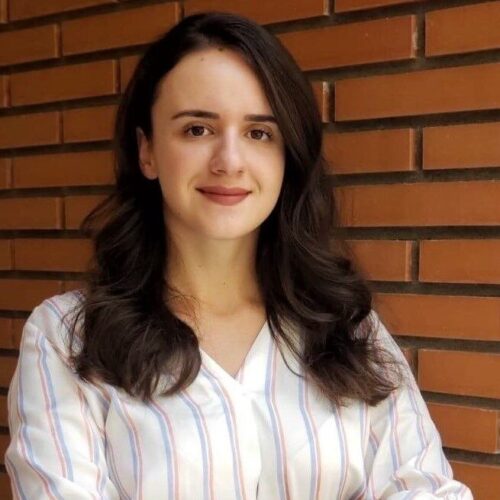
Enabling Technologies for Localization in 5G and Beyond: Terrestrial and Non-Terrestrial Networks
Alda Xhafa, Postdoctoral researcher at Universitat Aut’onoma de Barcelona (Spain)
Abstract
This talk will present recent research activities on localization in emerging 5G/6G terrestrial and LEO satellite systems, with a focus on reconfigurable intelligent surface (RIS)-aided positioning. RIS-assisted localization frameworks are introduced as a promising approach to enhance geometric diversity and parameter observability, enabling improved localization accuracy through programmable phase control. Performance trends and algorithmic insights for RIS-aided localization are briefly discussed, highlighting key trade-offs in system design for future non-terrestrial and hybrid TN/NTN localization systems.
Moreover, the talk will introduce signal design aspects for non-GNSS waveforms in LEO-based positioning, including LoRa/CSS and 5G/OFDM signaling formats, in the context of ongoing work toward the end-to-end in-orbit demonstration of a LEO-based positioning, navigation, and timing (PNT) system. These two research directions provide complementary perspectives on algorithmic and waveform-level enablers for beyond-GNSS localization in future hybrid terrestrial and non-terrestrial networks.
Biography
Alda Xhafa received her B.Sc. degree in telecommunication engineering from the Polytechnic University of Tirana (UPT), Tirana, Albania, in 2015, her M.Sc. degree in Telecommunication Engineering from Universitat Politècnica de Catalunya (UPC), Barcelona, Spain, in 2017, and her Ph.D. in Telecommunication Engineering from Universitat Autònoma de Barcelona (UAB), Spain, in 2024. During her doctoral studies, she completed a research stay at Airbus Defense and Space GmbH in Munich, focusing on 5G signal generation and reception for positioning, angular measurements using SDR equipment, and analysis of field data from commercial 5G networks. Currently, she is a postdoctoral researcher in the Signal Processing for Communications and Navigation (SPCOMNAV) group at the UAB, contributing to projects supported by the Spanish Agency of Research (AEI) and the European Space Agency (ESA). Her research interests include terrestrial and non-terrestrial localization systems, reconfigurable intelligent surfaces (RIS), and positioning using 5G/6G technologies.
14:00 - 14:30
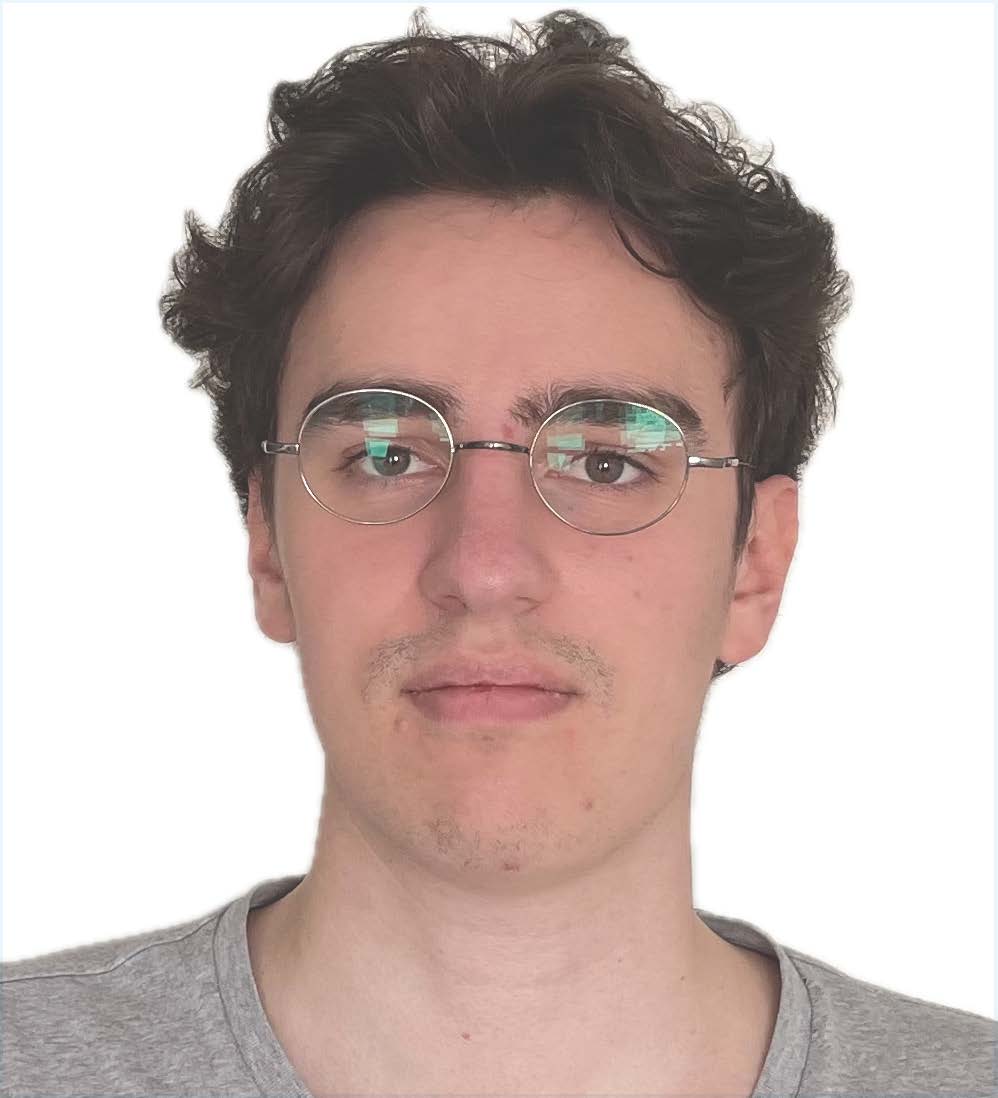
Privacy-Aware Design of Distributed MIMO ISAC Systems
Henrik Åkesson, PhD student at Linköping University (Sweden)
Abstract
Integrated Sensing and Communication (ISAC) systems raise unprecedented challenges regarding security and privacy since related applications involve the gathering of sensitive, identifiable information about people and the environment, which can lead to privacy leakage. Privacy-aware measures can steer the design of ISAC systems to prevent privacy violations. Thus, we explore this perspective for the design of distributed massive multiple-input multiple-output ISAC systems. For this purpose, we introduce an adversarial model where a malicious user exploits the interference from ISAC signals to extract sensing information. To mitigate this threat, we propose an iterative privacy-aware framework of two blocks: precoder design and access point selection. The precoder design aims to minimize the mutual information between the sensing and communication signals by imposing constraints on sensing and communication performance and maximum transmit power. The access point selection also aims to minimize the mutual information between communication and sensing signals by strategically selecting access points that transmit ISAC signals, and sensing receivers. Results show a reduction in the effectiveness of the attack measured by the probability of detection of the attacker.
Biography
Henrik Åkesson received the B.Sc. and M.Sc. degrees in computer science and engineering from Linköping University, Sweden in 2022 and 2024, respectively. He is currently pursuing the Ph.D. degree in electrical engineering with the division of communication systems, Linköping University. His main research interests include integrated sensing and communication, MIMO and radar.
14:45 - 15:30
Framework for Message Detection, Channel Estimation, and User Positioning for Unsourced Random Access in User-Centric Cell-Free Networks
Simon Tarboush, PhD student at TU Berlin (Germany)
Abstract
The core functionalities of future wireless networks extend beyond communication, with localization playing a crucial role in enabling new services. With the advent of distributed cell-free (CF) networks, new localization opportunities are emerging. In this seminar, we will present our recent positioning framework for unsourced random access (uRA) in user-centric CF networks, leveraging the location-based codebooks and multi-source approximate message passing (MS-AMP) algorithm. The proposed framework enables the simultaneous detection of active uRA codewords, estimation of their channel vectors, and inference of the active users’ position.
Biography
Simon Tarboush is currently pursuing the Ph.D. degree with the Communications and Information Theory Chair, Technical University of Berlin. He held a research position at King Abdullah University of Science and Technology (KAUST) between 2020 and 2025. His research interests lie in the areas of signal processing, estimation theory, and channel modeling, with a particular focus on wireless communications and radio localization.
Monday, April 27
13:15 - 13:45
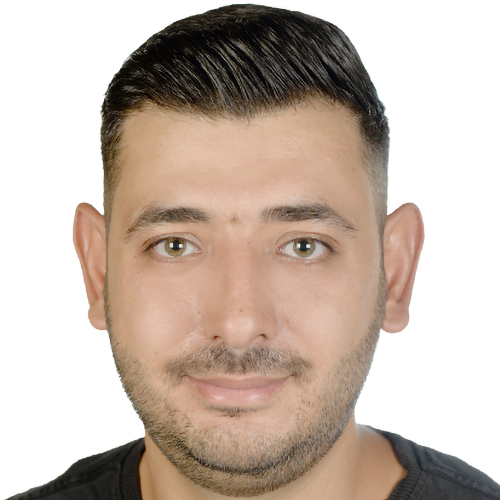
Fusion of Cellular ISAC and Passive RF Sensing for UAV Detection and Tracking
Cole Dickerson, PhD student at North Carolina State University (USA)
Abstract
The rapid growth of unmanned aerial vehicles (UAVs) in civilian and critical-infrastructure airspace has created a need for reliable detection and tracking systems that operate under diverse environmental and sensing conditions. This paper presents a UAV detection and tracking system that fuses measurements from a network of passive Keysight N6841A RF sensors and a Ku-band Fortem TrueView R20 radar operating in the FR3 spectrum (16.3 GHz) as an ISAC proxy. Real-world experiments at the NSF AERPAW testbed demonstrate that radar and RF sensing provide complementary strengths under varying geometric, range, and line-of-sight conditions. A Kalman filter using a constant-velocity motion model integrates the asynchronous 2D RF and 3D radar observations, suppressing large standalone errors, improving accuracy over individual modalities, and increasing tracking coverage without degrading performance. These results demonstrate the effectiveness of multi-modal, ISAC-oriented sensing for robust UAV tracking in outdoor environments.
Biography
Cole Dickerson earned his Bachelor of Science in Engineering with a concentration in Electrical Engineering and a minor in Mathematics as a Brinkley-Lane Scholar at East Carolina University in 2023. He is currently pursuing a Ph.D. in Electrical Engineering at North Carolina State University, where he is supported by the National Science Foundation Graduate Research Fellowship. His research focuses on advanced methods for UAV tracking and localization using wireless sensor networks, radar systems, and machine learning, with applications in counter-UAV sensing.

14:00 - 14:30
Drone Surveillance via Coordinated Beam Sweeping in MIMO-ISAC Networks
Palatip Jopanya, PhD student at Linköping University (Sweden)
Abstract
We propose a novel scheme for drone surveillance coordinated with the fifth generation (5G) SSB cell-search procedure to simultaneously detect low-altitude drones within a volumetric surveillance grid. Herein, we consider a multistatic configuration where multiple access points (APs) collaboratively illuminate the volume while independently transmitting SSB broadcast signals. Both tasks are performed through a beam sweeping. In the proposed scheme, coordinated APs send sensing beams toward a grid of voxels within the volumetric surveillance region simultaneously with the 5G SSB burst. To prevent interference between communication and sensing signals, we propose a precoder design that guarantees orthogonality of the sensing beam and the SSB in order to maximize the sensing signal-to-interference-plus-noise ratio (SINR) while ensuring a specified SINR for users, as well as minimizing the impact of the direct link. The results demonstrate that the proposed precoder outperforms the non-coordinated precoder and is minimally affected by variations in drone altitude.
Biography
Palatip Jopanya is currently pursuing a Ph.D. degree in the Division of Communication Systems at Linköping University. His research interests include integrated sensing and communication (ISAC) and drone detection in MIMO ISAC systems.
14:45 - 15:15
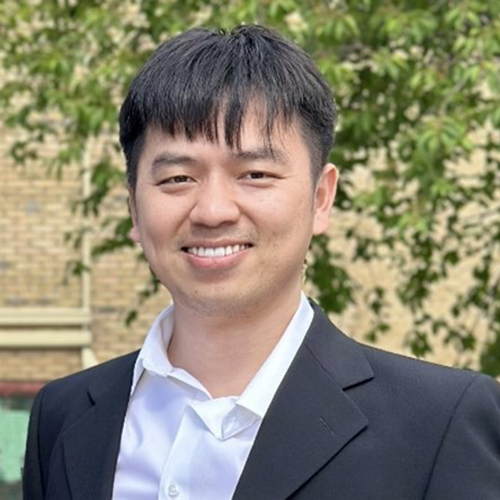
I Didn’t See That Coming – D-MIMO ISAC for Automotive Safety
Silan Karadag, Industrial PhD student at Chalmers and Volvo Cars (Sweden)
Abstract
Consider an urban intersection where a cyclist suddenly emerges from behind buildings. In moments like these, what a single vehicle or roadside sensor can perceive is often limited by line-of-sight constraints. Relying solely on isolated onboard sensors can leave critical blind spots, exactly when timely awareness is most important.
Motivated by real-world accident data, we identify representative automotive scenarios in which Integrated Sensing and Communication (ISAC) can offer clear safety benefits. Building on this motivation, we study D-MIMO ISAC for automotive perception. We consider a phase-coherent architecture where spatially separated access points sense the environment. When measurements are brought together across the network, the distributed nodes behave like a single, much larger array, leading to improved spatial diversity and more accurate localization.
Finally, we share insights from testbed experiments, where ISAC is evaluated using real hardware.
Biography
Silan Karadag is an Industrial PhD student at Chalmers University of Technology and Volvo Cars, researching Integrated Sensing and Communication (ISAC) systems for future automotive applications. With her background in radar, antennas, signal processing, defense and automotive technologies, the work focuses on enabling vehicles to sense, localize, and communicate seamlessly with their surroundings for safer and more intelligent mobility. When not at the office, Silan is often outdoors, hiking, cycling, or chasing a good view in nature.

15:30 - 16:00
Dual-Deconvolution Methods for Integrated Sensing and Communications
Jonathan Monsalve, Professor at Universidad de Investigación y Dessarrollo (Colombia)
Abstract
Integrated sensing and communications (ISAC) enables spectrum sharing between radar and wireless systems but poses significant challenges for signal separation and parameter estimation at the receiver. In this talk, I will present recent results on dual-deconvolution methods for ISAC, addressing scenarios where radar and communications signals are overlaid.
I will first discuss a dual-blind deconvolution framework, where both channels are unknown, and show how tools from Beurling–Selberg extremal function theory lead to joint recovery guarantees and low-rank Hankel matrix formulations. I will then consider a non-blind automotive ISAC setting and introduce a low-complexity approach based on controlled loosening-up (CLuP) and nuclear norm constraints.
Biography
Jonathan Monsalve received the B. Sc. and M. Sc. degrees in Computer Science from Universidad Industrial de Santander, Colombia, in 2015 and 2018, respectively. Recently, He finished his Ph.D. in Electronics Engineering at Universidad Industrial de Santander, sponsored by a Colciencias/department of Santander scholarship. He received the IEEE Michael C. Wicks Radar Student Travel Grant in 2025 for his work “CLuP-Based Dual-Deconvolution in Automotive ISAC Scenarios”. His main research areas are computational imaging, optical code design, signal processing and subspace learning.
Tuesday, April 28
13:15 - 13:45
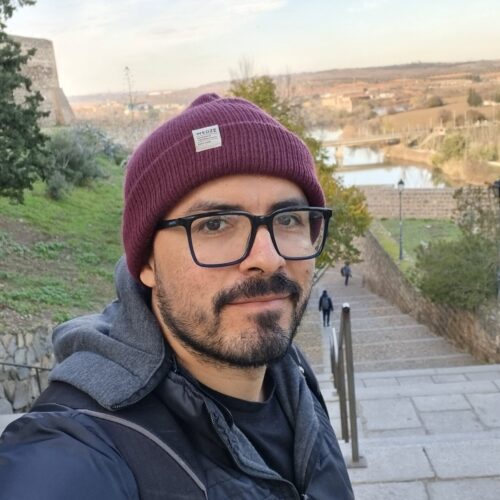
Fluid Antenna Systems for Localization
Lucía Pallarés Rodríguez, PhD student at Universitat Aut’onoma de Barcelona (Spain)
Abstract
The deployment of multiple antennas at both the transmitter and receiver has become a cornerstone of current 5G and emerging 6G mobile networks, enabling higher data rates, improved coverage, and enhanced localization capabilities. In parallel, operation in the millimeter wave (mmWave) spectrum offers significantly larger bandwidths, increasing channel capacity and alleviating spectrum scarcity in the sub-6 GHz bands. However, operation at higher frequencies requires a larger number of antennas in order to maintain coverage, which in turn raises hardware complexity and power consumption. Furthermore, while such large antenna arrays can be accommodated at base stations, the limited physical size of user equipment (UE) constrains the number of deployable antennas, thereby restricting spatial diversity and angular resolution at the receiver. In this context, fluid antenna (FA) systems have recently attracted considerable attention as a promising solution. Unlike conventional fixed antenna architectures, FA systems enable dynamic adjustment of antenna positions within a predefined region, allowing the system to adapt to channel conditions and improve performance. This talk explores the use of FA systems in future wireless networks. It begins with an overview of their operating principles and key design considerations, followed by recent advances in the wireless communications domain, illustrating how these systems can enhance communication performance. The talk concludes by examining the potential of FAs in the localization and sensing domains, highlighting the opportunities and the performance gains that can be achieved.
Biography
Lucía Pallarés Rodríguez received the B.Sc. and M.Sc. degrees in telecommunication engineering from Universitat Autònoma de Barcelona, Barcelona, Spain, in 2022 and 2024, respectively. From September 2023 to February 2024, she was an intern at the European Space Agency, during which she carried out her M.Sc. thesis on interference detection and mitigation in multi-antenna GNSS receivers. She is currently pursuing a Ph.D. at the Signal Processing for Communications and Navigation (SPCOMNAV) research group, Universitat Autònoma de Barcelona, focusing on the use of reconfigurable antennas for localization in 5G/6G networks. Her research interests include advanced antenna array processing and localization in wireless networks.
14:00 - 14:30
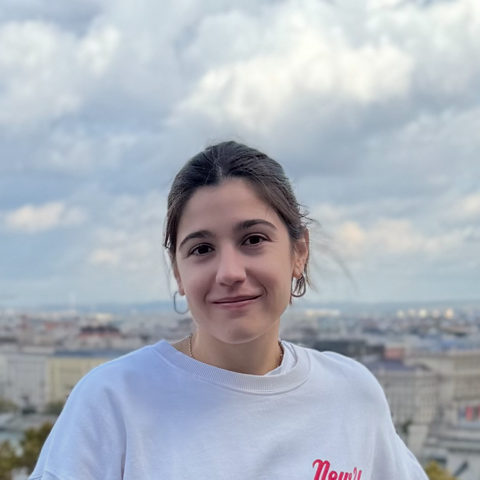
Toward Robust Wireless Localization in 6G Networks
Alireza Pourafzal, Postdoctoral researcher at Chalmers (Sweden)
Abstract
Fifth- and sixth-generation cellular systems are increasingly becoming sensing platforms in addition to communication infrastructure. With wide bandwidths and large antenna arrays, standard reference signals and pilots naturally contain geometric information such as time-of-arrival, angles, Doppler, and multipath structure, enabling positioning and environment inference without dedicated radar hardware. This talk gives a high-level, non-technical overview of how these physical-layer observables support localization and sensing in practice, and why the same capabilities also create new privacy challenges. I will discuss how location-related features can be used as additional authentication cues, how realistic analog and hybrid array architectures enable adversaries to manipulate or imitate these cues, and how waveform-level strategies can provide location privacy by reducing or shaping what an untrusted observer can infer. The goal is to connect opportunities in 6G ISAC with the emerging need for joint design of localization accuracy, integrity, and privacy.
Biography
Alireza Pourafzal received his Bachelor’s degree in Electrical Engineering in 2016 and his Master’s degree in Wireless Communications in 2019 from K.N. Toosi University of Technology in Iran. He earned his PhD in Information and Communication Technology in 2023 from the Norwegian University of Science and Technology (NTNU). He is currently a Postdoctoral Researcher in the Communication Group at Chalmers University of Technology, Sweden. His research interests include array signal processing, channel estimation, DOA estimation, and machine learning for wireless and optical communications.
14:45 - 15:15
Near-field sensing: opportunities and challenges
Marcin Wachowiak, PhD student at KU Leuven (Belgium)
Abstract
The need for high-throughput communications and high-resolution sensing drives the increase in antenna array sizes and their operating frequency. As a result, the radiative near-field region of the array is expanded, and it becomes feasible to consider users or targets located within it. In the near-field region, the phase difference across the array is modeled in full detail by a spherical wavefront. The nonlinear phase difference across antennas results in a steering vector (and array factor) that is range-dependent, enabling beamfocusing, which is beamforming in the range domain. The nonlinear phase difference can be viewed as an additional source of diversity, offering novel capabilities and performance enhancements to both sensing and communication systems. This enables the array to discriminate between the users or targets at the same angle but different distances solely on the phase information (the steering vector) and with limited reliance on bandwidth. The seminar will discuss the performance benefits of the near-field regime on the sensing ambiguity function and the problem of sizing and implementing the large antenna arrays.
Biography
Marcin Wachowiak received the M.Sc. degree in electronics and telecommunications from the Poznań University of Technology, Poland, in 2022. He is currently pursuing the Ph.D. degree in electrical engineering with Interuniversity Microelectronics Centre (imec) and Katholieke Universiteit Leuven (KU Leuven), Belgium. His research interests include large antenna array architectures and near-field communication and sensing systems.

Wednesday, April 29
13:15 - 13:45
Fundamentals and Experiments of Robust Respiration Sensing via Cell-Free Massive MIMO Systems
Haoqui Xiong, PhD student at KU Leuven (Belgium)
Abstract
Respiration monitoring via radio signals enables contactless health sensing but suffers from interference caused by nearby motion. We propose a robust respiration sensing framework using Cell-free Massive MIMO (CF-mMIMO), which leverages spatial macro-diversity for interference resilience. Specifically, we analyze respiration sensing in single-antenna channels using Power Spectral Density (PSD) to reveal the impact of interference on the breathing channel’s movement spectrum. Based on this, we introduce a new metric, Sensing-Signal-to Interference Ratio (SSIR), to evaluate local channel quality without requiring ground truth. Then, we design a Weighted Antenna Combining (WAC) method to prioritize reliable sensing links and suppress distortion. Experimental validation using a 64 antenna CF-mMIMO testbed with 100 Orthogonal Frequency Division Multiplexing (OFDM) subcarriers over an 18 MHz bandwidth confirms the framework’s robustness. In the presence of interference, the WAC method achieves a mean waveform correlation of 0.81 with ground truth, significantly outperforming single-antenna (0.52), averaging-based methods (0.53), and existing Wi-Fi approaches. Finally, we analyze the impact of time, frequency, and spatial resource allocation on both communication and sensing performance. Results show that increasing bandwidth and antenna count benefits both communication and sensing. With a sufficient number of antennas, respiration sensing remains accurate even with long coherence times (1 second) and narrow bandwidths (3 subcarriers), enabling its integration into communication systems with negligible overhead, making it practically “for free”. This makes CF-mMIMO a promising architecture for robust and scalable Integrated Sensing and Communication (ISAC) health monitoring.
Biography
Haoqiu Xiong received the bachelor’s degree in optoelectronic information science and engineering from the Harbin Engineering University in 2019, and the M.Sc. by research in electronic engineering from the Southern University of Science and Technology in 2022. Since 2023, he has been a PhD student with the Networked Systems Group, Department of Electrical Engineering (ESAT), KU Leuven. His research interests include integrated sensing and communication, cell-free MIMO signal processing, and Wi-Fi sensing.

14:00 - 14:30
Cooperative user tracking and environment sensing with distributed MIMO
Yingjie Xu, PhD student at Lund University (Sweden)
Abstract
Distributed multiple-input multiple-output (MIMO), also known as cell-free MIMO, is a promising technology for improving both sensing and communication performance. This talk first addresses the challenge of radio-based user tracking in distributed MIMO systems. We introduce a tracking framework that combines a robust tracking filter with dynamic access point (AP) management. We then move beyond user tracking to radio-based environment mapping, and propose a spatial filtering approach to enable efficient mapping of the surrounding environment. Experimental results with a real-world distributed MIMO testbed are presented to evaluate both tracking accuracy and sensing performance.
Biography
Yingjie Xu is currently pursuing the Ph.D. degree in electrical engineering and wireless communication with the Department of Electrical and Information Technology, Lund University, Lund, Sweden. His research interests include 6G wireless channel measurements and modeling, distributed MIMO communication systems, and integrated sensing and communications.

14:45 - 15:15
Multi-Sensor Fusion for Extended Object Tracking Exploiting Active and Passive Radio Signals
Hong Zhu, PhD student at Graz University of Technology (Austria)
Abstract
Reliable and robust positioning of radio devices remains a challenging task due to multipath propagation, hardware impairments, and interference from other radio transmitters. A frequently overlooked but critical factor is the agent itself, e.g., the user carrying the device, which potentially obstructs line-of-sight (LOS) links to the base stations (anchors). This paper addresses the problem of accurate positioning in scenarios where LOS links are partially blocked by the agent. The agent is modeled as an extended object (EO) that scatters, attenuates, and blocks radio signals. We propose a Bayesian method that fuses “active” measurements (between device and anchors) with “passive” multistatic radar-type measurements (between anchors, reflected by the EO). To handle measurement origin uncertainty, we introduce an multi-sensor and multiple-measurement probabilistic data association (PDA) algorithm that jointly fuses all EO-related measurements. Evaluation on both synthetic and real radio measurements demonstrates that the proposed algorithm outperforms conventional PDA methods based on point target assumptions, particularly during and after obstructed line-of-sight (OLOS) conditions.
Biography
Hong Zhu received her MSc degree in Electronics and Information Engineering from Tongji University, Shanghai, China, in 2022. She is currently a PhD candidate and Project Assistant at the Institute of Communication Networks and Satellite Communications at Graz University of Technology, Austria. Her research interests include radio localization and sensing, statistical signal processing, and data fusion. As a researcher in the Christian Doppler Laboratory for Location-aware Electronic Systems, her topic focuses on “Distributed UWB Signal Processing for Robust and Scalable Positioning.” She has published two conference papers and has one journal paper under review on this research topic.